Why sliding glass doors are different from regular windows
Sliding glass doors look simple, but they behave differently than a standard window:
- They’re wider, so the shade has to stay straight and stable across a larger span.
- People use them constantly, so controls need to be durable and convenient.
- They’re often near patios, pools, or kitchens, so moisture and heat matter.
- They’re a major privacy and glare source—especially at night when interior lights are on.
World Wide Shades builds custom solutions for big openings, including patio doors and multi-panel sliders. If you want help choosing a configuration, start with our Shade Builder. World Wide Shades can also recommend the best fabric and control type for your exact door width.
The main decision: one wide shade, or multiple shades?
There isn’t a single “best” setup. The right answer depends on the width of your door, how often you use it, and where the handle and lock are located.
This can look sleek, but it’s not always the most practical.
Best for:
- Doorways that are used less frequently
- Clean, minimal aesthetics
- When you want one uniform fabric look
Watch outs:
- Wider shades can be heavier and may deflect more if bumped.
- If one component needs service, the entire opening is affected.
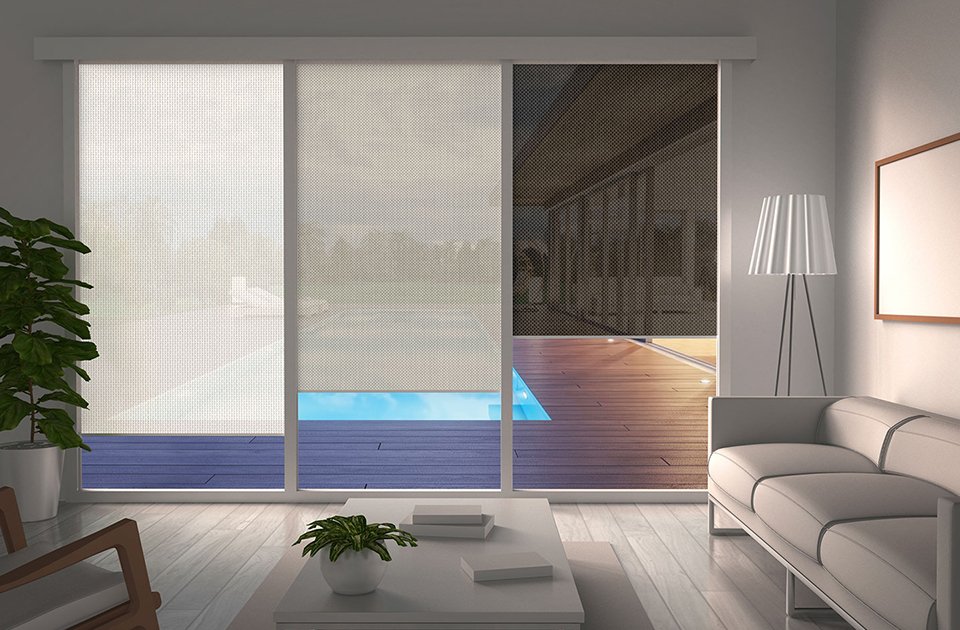
Many homeowners prefer multiple shades so they can raise only the side they’re using.
Best for:
- Daily traffic doors
- Wider openings
- Homes where one panel is usually stationary
If you’re trying to decide the best layout for your exact opening, World Wide Shades can help—reach out through contact or call (844) 674-2716.
Best fabric types for patio doors and sliders
Sliding doors often get more sun exposure than other windows, so fabric performance matters.
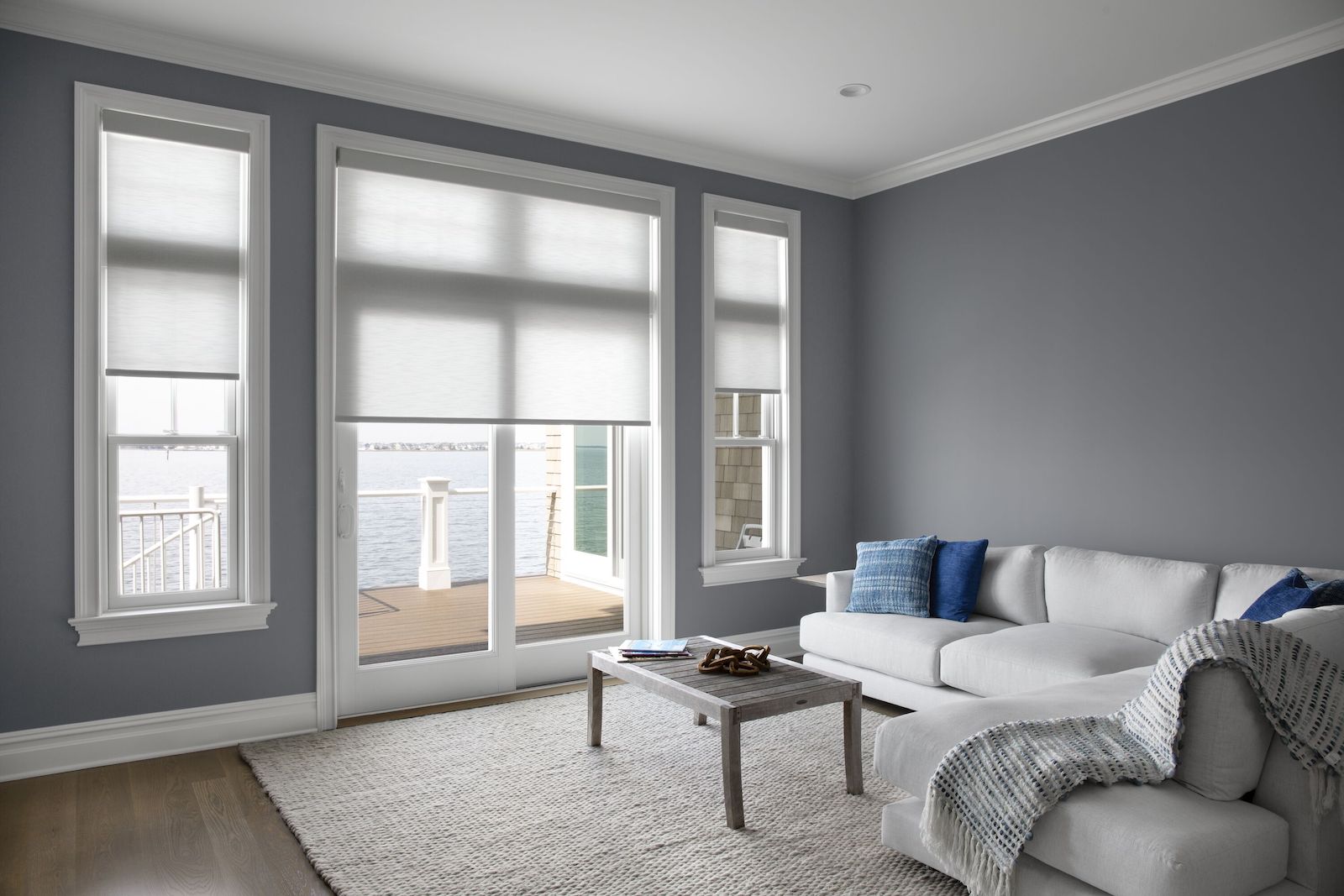
Light-filtering fabrics are popular because they:
- Reduce harsh sunlight
- Maintain a bright indoor feel
- Provide some privacy without making the room feel closed in
They’re great for living rooms and open-concept spaces where the patio door is a focal point.
If you want to reduce glare while still seeing outside, solar-style fabrics can be a strong fit.
If you’re comparing options, read solar shades vs roller shades.
Room-darkening or blackout can be ideal when:
- Your patio door faces a neighbor
- You watch TV in the same room and fight reflections
- You want stronger nighttime privacy
If you’re deciding between products, our breakdown of blackout curtains vs blackout shades can help.
Openness and privacy: what works on sliding doors
Large glass doors can feel exposed, so the privacy plan matters.
Many fabrics look private during the day, but at night—when interior lights are on—people outside can often see silhouettes.
A practical approach is:
- Choose a daytime-friendly fabric (light-filtering or solar-style)
- Add a stronger privacy setting for nighttime (room-darkening, blackout, or a second layer)
World Wide Shades can help you pick a fabric that fits your neighborhood, sun exposure, and view needs. Start with swatches to see materials in your own lighting.
Controls: cordless vs chain vs motorized
Your control choice matters more on a door than on a window because you’ll adjust it more often.
Cordless roller shades are a great fit for family spaces. For homes with kids, cordless is also the safest choice.
If safety is a priority, read child safe window treatments.
Chain controls are common for larger shades. If you choose chain, proper tensioners and safe installation matter.
Motorization is one of the best upgrades for sliding doors because it makes a big shade feel effortless. It’s also ideal if your door is behind furniture or you want scheduled open/close routines.
If you want a smart-home setup, see smart home motorized shades setup and motorized shades that work with Alexa and Google Home.
To price motorized options fast, build yours in the Shade Builder.
Mounting: inside mount vs outside mount on patio doors
Mount choice affects both appearance and performance.
Inside mount can look very clean if you have enough depth and a good surface for brackets.
Outside mount is common on sliding doors because it can reduce light gaps and cover unusual trim or uneven openings.
For a deeper comparison, see inside mount vs outside mount shades.
Measuring for sliding glass door roller shades
Measuring sliding doors is about more than width and height.
Depending on your mount choice, you may be measuring:
- The glass only
- The full door frame
- The wall area above the door
Your shade should clear handles and not interfere with the sliding panel. This is a common reason homeowners choose two shades instead of one.
If you want a step-by-step measuring walkthrough, follow how to measure windows for roller shades and adapt the same principles for your door opening.
And if you’re DIY installing, keep this guide close: how to install roller shades.
Design tips: make the patio door look intentional
Sliding doors can look “unfinished” when the hardware is visible.
A valance can hide brackets and create a more built-in appearance—especially helpful for a big glass opening.
See ideas in roller shade valance options.
If your patio door is next to windows, matching the shade family (or at least the color temperature) helps the room feel cohesive.
If you’re choosing colors, review window shades color guide.
Common sliding door scenarios (and what we recommend)
- Two shades side-by-side so you can raise the active panel
- Durable control (motorized or quality chain)
- Light-filtering or solar-style fabric
Get options in the Shade Builder.
- Lower openness solar-style fabric or room-darkening roller shade
- Outside mount to reduce side gaps
If sun control is a big priority in your home, see principles in best shades for south facing windows.
- Easy-to-clean roller fabric
- Consider cordless or motorized to keep controls away from splashes
For other moisture-prone spaces, our guide to roller shades for kitchen and bathroom is useful.
- Choose a durable fabric
- Consider cordless or motorized
For pet-friendly ideas, read pet friendly window treatments.
FAQ: Roller shades for sliding glass doors
Yes. Roller shades are one of the cleanest, most space-efficient options for sliding doors, especially when sized correctly and paired with the right mount.
Two shades are often more convenient because you can raise only the panel you’re actively using. One wide shade can look seamless but may be less flexible day to day.
Not always. Many homes do best with light-filtering or solar-style fabrics for daytime comfort, then prioritize privacy at night with room-darkening or blackout if needed.
For large openings, yes. Motorization makes daily adjustments easy and keeps the shade movement consistent.
Outside mount, proper width, and a valance/fascia can all help reduce perceived gaps.
Get a custom-fit sliding door shade that works every day
A sliding door is one of the most-used openings in the home. World Wide Shades helps you choose fabrics and controls that look clean, move smoothly, and deliver the privacy and glare control you need.
- Build your exact configuration in the Shade Builder
- See materials in your own space with swatches
- Ask an expert at contact or call (844) 674-2716