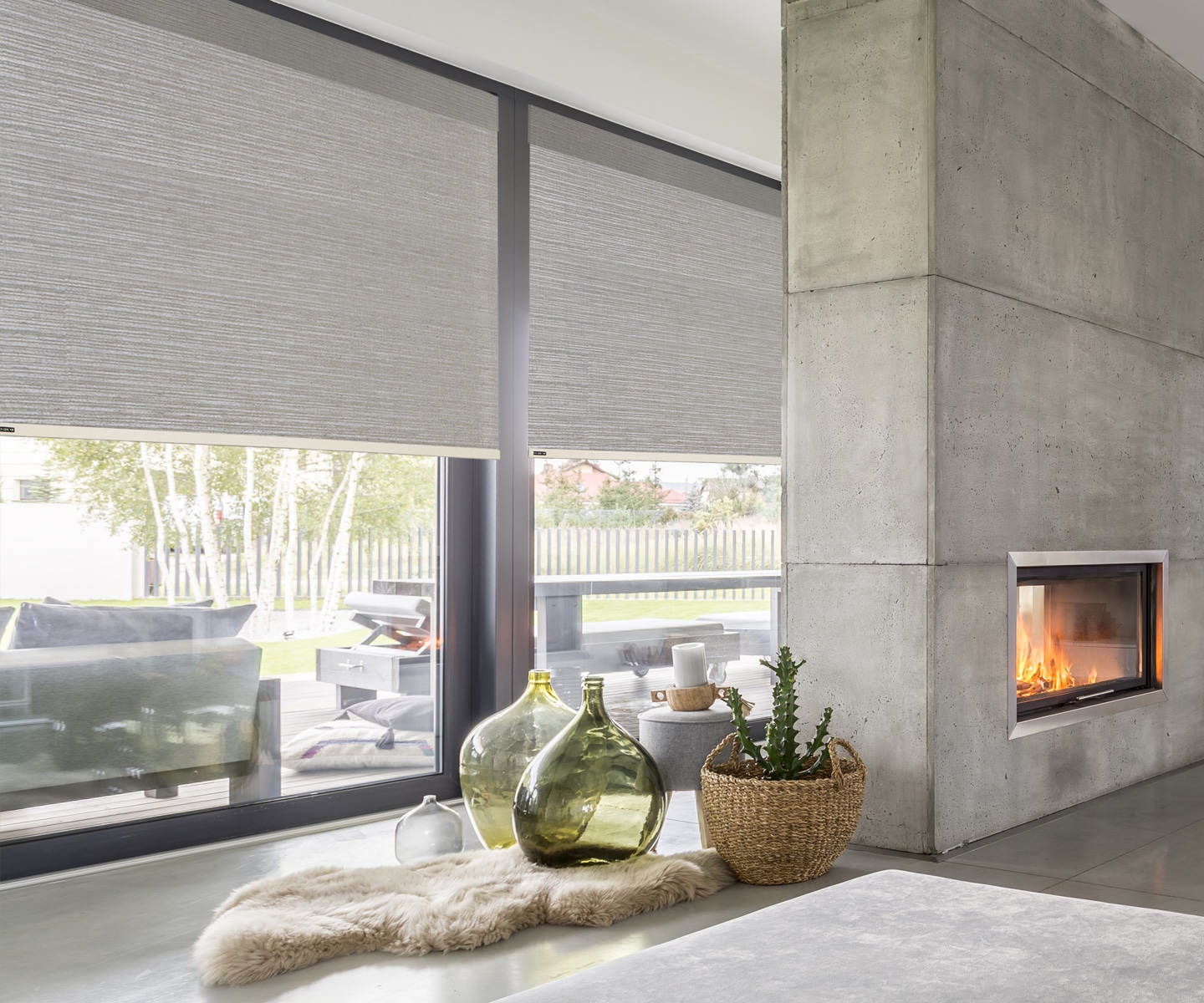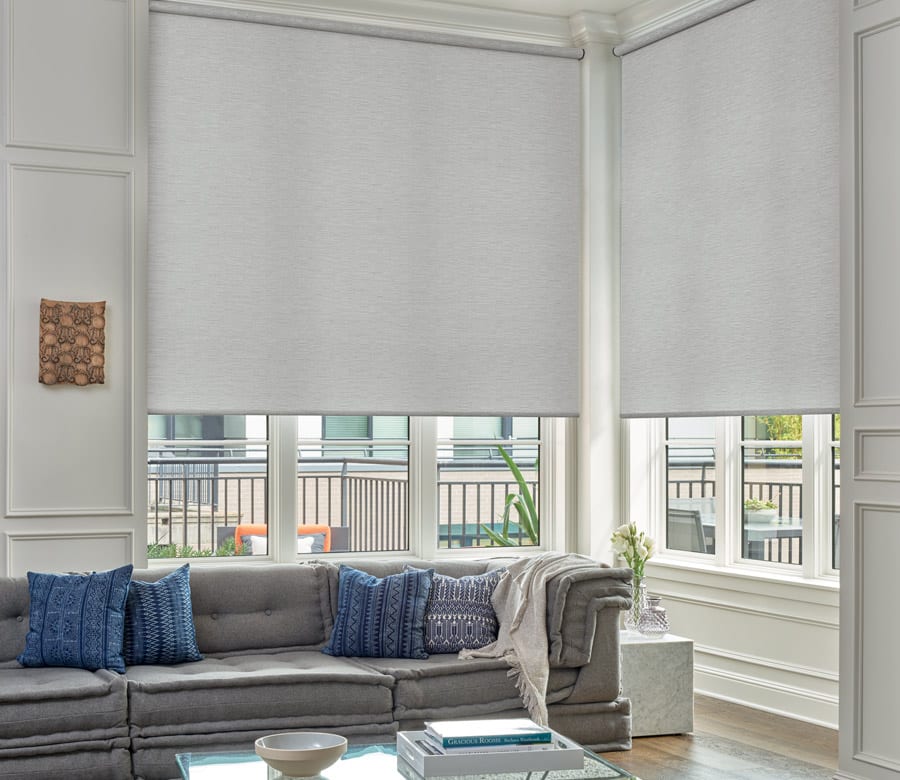
Walk into any well-designed corporate office, law firm, or coworking space and you'll notice the windows are doing real work. Not just blocking sun — managing glare, controlling heat gain, maintaining privacy, and reinforcing a cohesive interior aesthetic. Commercial roller shades are the workhorse behind all of it.
World Wide Shades has been specifying and fabricating commercial window treatments for offices throughout New York City and the surrounding region for years. Our Bronx-based team handles everything from single conference rooms to full floor plates — custom-fabricated to your exact opening dimensions and delivered with the hardware to match. This guide covers everything you need to make the right call for your workspace — fabric types, sizing, motorization, and the practical numbers that matter when you're outfitting a full floor rather than a single room.
Use our online shade builder to configure and price your commercial shades before you engage a contractor — it takes about five minutes per window.
Why Roller Shades Outperform Other Commercial Window Treatments
Venetian blinds, vertical blinds, and drapes all have their place, but in commercial environments roller shades consistently win on three fronts: durability, maintenance, and appearance.
A quality commercial roller shade operates on a sealed, tensioned clutch or motor mechanism that handles thousands of cycles without skipping. In a busy office where shades go up and down multiple times per day, that reliability matters. Fabric-based alternatives like drapes collect dust, allergens, and debris — a real concern in open-plan spaces with high foot traffic. Roller shades wipe clean in seconds.
From a design standpoint, roller shades offer a clean, architectural look that scales well from a single window to an entire curtain wall. A unified fabric across 40 windows creates visual coherence that no other window treatment matches at the same price point. World Wide Shades fabricates commercial shades up to 144 inches wide on a single tube — wide enough for most commercial openings without resorting to multi-shade systems.
Fabric Selection: The Most Important Decision You'll Make
The fabric you choose determines roughly 80% of the shade's performance. For commercial applications, the three most relevant categories are solar screen fabrics, blackout fabrics, and light-filtering fabrics.
Solar screen fabrics are the most widely specified option for office environments. They're woven with varying degrees of openness — typically rated from 1% to 14% — that determine how much light and heat passes through while still preserving an outward view. A 3% openness fabric is the commercial sweet spot: it blocks around 97% of direct UV radiation, substantially reduces glare on computer monitors, and cuts solar heat gain by 40–60% compared to an unshaded window, all without making occupants feel closed in. Browse free fabric swatches from World Wide Shades to see physical samples across all openness factors before specifying.
Blackout fabrics are appropriate for conference rooms, training rooms, presentation spaces, and any area where projected visuals are used. True blackout fabrics — with a foam or metalite backing — achieve near-total light block when paired with side channels or recessed cassettes that eliminate light gap. Without side channels, even a "blackout" fabric will show light bleed of 15–20% at the edges.
Light-filtering fabrics fall between solar screen and blackout in terms of opacity. They soften and diffuse daylight without eliminating it, making them a good fit for private offices, reception areas, and spaces where a warm, ambient feel is preferred over precision glare control.
For a deeper breakdown of how these fabrics compare in residential and commercial contexts, see our guide to best fabrics for roller shades.
Sizing and Specification for Commercial Projects
Commercial windows are not residential windows. They're larger, often floor-to-ceiling, and frequently installed in multiples within a single opening or across entire facades. Getting the sizing right before fabrication is critical — custom commercial shades are not returnable.
Standard commercial roller shade widths run from 24 inches to 144 inches on a single tube. Beyond 96 inches, you're typically looking at heavy-duty 2-inch or 2.5-inch tubes with reinforced end caps to prevent fabric sag. For openings wider than 144 inches, a coupled or dual-shade system — two independent rollers meeting at center — is the standard solution.
Drop (length) on commercial shades can run up to 180 inches in most fabric lines, with some specialty fabrics going to 240 inches. Floor-to-ceiling installations on a standard 9-foot ceiling need approximately 115 inches of drop when accounting for header space and a modest floor clearance.
Inside mount vs. outside mount is a more nuanced decision in commercial settings than it is residentially. Inside mounts offer the cleanest look and pair well with recessed cassettes, but require a minimum window depth of 2 inches for hardware clearance. Outside mounts are necessary when the depth isn't available and are often preferred when covering full wall sections rather than individual window openings.
Contact World Wide Shades at (844) 674-2716 for oversized or unusually proportioned openings — our commercial team can advise on fabrication limits and the best dual-shade configurations for large glass expanses.
Motorization in Commercial Settings: A Practical Necessity
Manual chain operation works fine for a single shade. Across a 50-window office floor, it's impractical, inconsistent, and — in some configurations — inaccessible. Motorization is standard practice in commercial roller shade projects for good reason.
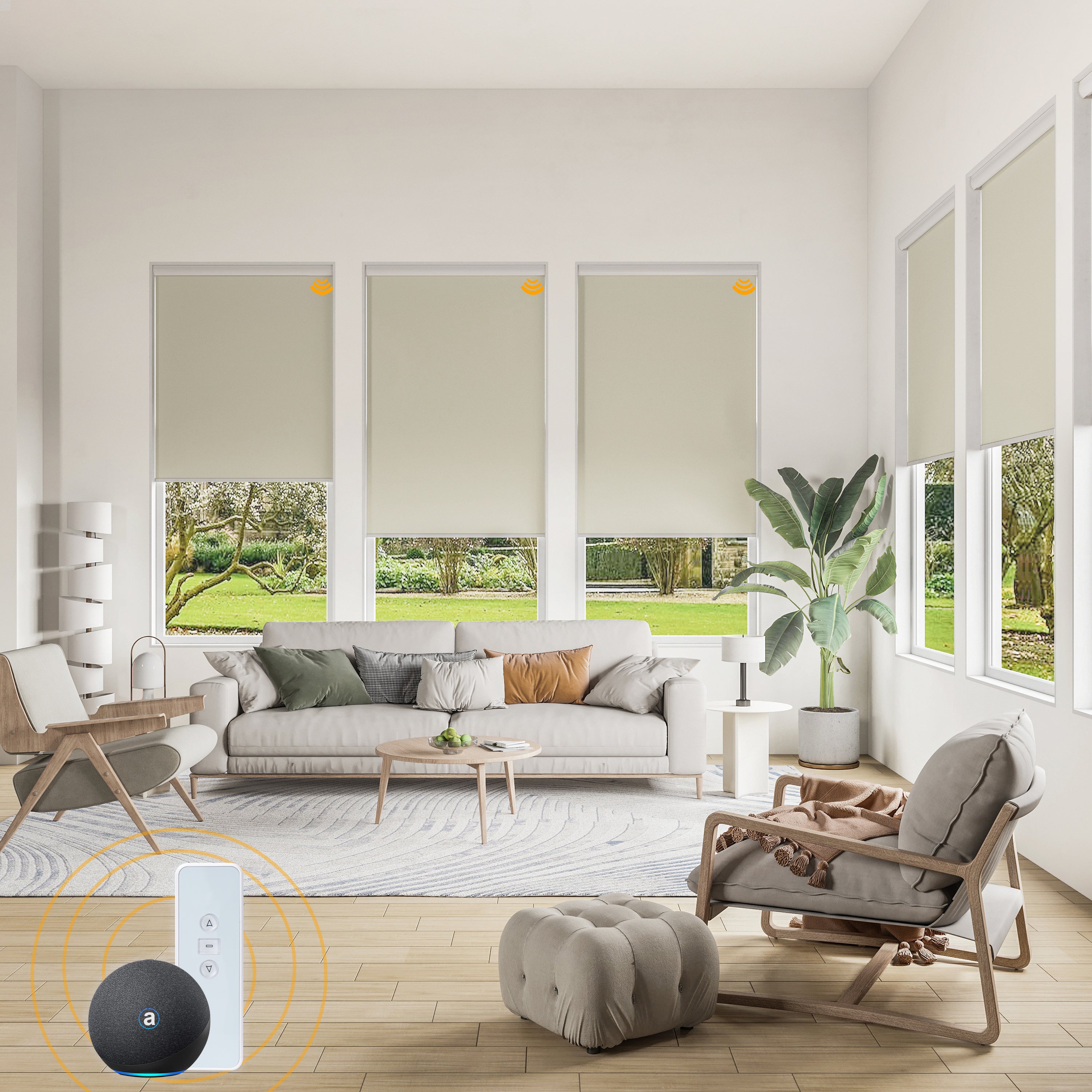
Modern commercial motorization runs on either 110V AC wiring (hard-wired) or battery/rechargeable systems for retrofit applications. Hard-wired motors from brands like Somfy, Rollease Acmeda, and Lutron tolerate heavy duty cycles and integrate with building management systems (BMS), allowing HVAC and shading to coordinate automatically based on solar position and internal temperature.
A typical hard-wired commercial motor costs $150–$300 per shade for the motor unit alone, plus installation labor. For a 20-window project, total motorization costs commonly run $8,000–$15,000 depending on integration complexity — but the energy savings from automated solar management often recoup that cost within 3–5 years in sun-exposed commercial spaces.
For a thorough look at the ROI case for motorized systems and platform integration details, see our guide on smart home motorized shade setup. World Wide Shades supplies commercial-grade motorized shades compatible with Lutron, Somfy, and other leading commercial automation platforms.
Energy Performance and Commercial Building Codes
Energy efficiency is not a soft benefit in commercial construction — it's often a code and certification requirement. LEED, ENERGY STAR for commercial buildings, and local energy codes in jurisdictions like New York City (LL97, for example) all create real financial incentives to reduce solar heat gain.
Solar screen fabrics with a 3% or 5% openness factor carry a Solar Heat Gain Coefficient (SHGC) reduction of roughly 40–60% when installed on south- and west-facing glass. On a floor plate with significant western exposure, that translates directly to reduced peak cooling load and lower electricity costs. The U.S. Department of Energy estimates that solar heat gain through windows accounts for approximately 76% of the heat that enters a commercial space in summer months — making window treatment a legitimate HVAC-load reduction strategy.
World Wide Shades can provide fabric spec sheets with documented SHGC values and VLT data for LEED submittals and building energy audits. For a full breakdown of how fabric choices affect energy performance, our energy-efficient window shades guide covers SHGC values, visible light transmittance (VLT), and how to read fabric spec sheets.
Get started with a custom quote from World Wide Shades — price your commercial project by window dimensions and fabric type before your next contractor meeting.
Applications by Space Type
Different commercial spaces have distinct shading priorities, and it's worth thinking through each zone independently before specifying a single fabric across an entire project.
Open-plan offices are primarily a glare management problem. Occupants at workstations face screens for 6–8 hours a day, and direct or reflected glare causes eye strain, productivity loss, and complaints to building management. A 3% or 5% openness solar screen fabric, ideally on a motorized system with group controls by facade orientation, handles this effectively without making the space feel dim. World Wide Shades supplies group-controlled motorized systems that let facility managers adjust entire facades with a single command.
Conference and meeting rooms need flexibility. During daylight meetings, a light-filtering or 5% solar screen fabric maintains a professional look. During presentations, full blackout is required. Dual-shade systems — a blackout shade paired with a solar screen on the same roller system — solve this with a single hardware installation and are the preferred solution in rooms that serve both functions.
Executive offices and private suites often prioritize aesthetics alongside function. Fabric textures, custom color matching, and cassette finish options (brushed aluminum, powder-coated steel, wood laminate) matter more here than in an open floor environment. Pricing for higher-end fabric and cassette combinations typically runs $85–$175 per square foot installed, depending on specification.
Reception and lobby areas are brand touchpoints. Fabric color and pattern should align with interior design intent, and motorization is almost always specified so the reception environment can be adjusted consistently without visible cord hardware. Translucent or light-diffusing fabrics that create a soft, welcoming atmosphere work well here.
For a guide to how finish choices — cassette vs. fascia vs. exposed roll — affect both aesthetics and light performance, see our roller shade valance options guide.
Hardware and Installation Considerations
Commercial roller shade hardware is meaningfully different from residential-grade product. Tube diameters, bracket load ratings, and clutch mechanisms are all heavier-spec to handle wider widths, heavier fabrics, and higher cycle counts.
Cassettes — the enclosed housing that conceals the rolled fabric — are standard in commercial installations. A fascia cassette mounts on the face of the window frame and costs roughly $25–$60 per linear foot depending on size and finish. Recessed cassettes, which sit inside a ceiling or header pocket, provide the cleanest look but require coordination with the general contractor during construction or renovation.
Side channels are often overlooked but critical for blackout performance in conference rooms and any application where light gap is unacceptable. They run approximately $15–$30 per linear foot and must be factored into rough opening dimensions.
Installation labor in the New York City market typically runs $75–$150 per shade for straightforward installs, with higher rates for high-ceiling work requiring lift equipment or complex integration work.
Use the World Wide Shades custom shade builder to input your window dimensions and get an accurate fabrication quote before engaging a contractor.
Pricing Benchmarks for Commercial Projects
Commercial shade pricing varies widely by fabric, hardware, and motorization, but the following ranges reflect current market rates for quality commercial-grade product:
- Manual solar screen roller shades, fabricated to size: $65–$120 per shade for widths up to 72 inches
- Blackout shades with cassette, manual: $95–$160 per shade
- Motorized solar screen shades, battery motor: $275–$450 per shade including motor
- Motorized shades, hard-wired AC motor: $350–$600 per shade before installation
- Dual-shade systems (blackout + solar screen): $450–$750 per opening motorized
For large-volume commercial projects (25+ shades), per-unit pricing typically decreases 10–20% due to fabric yield efficiency and consolidated shipping. Contact World Wide Shades at (844) 674-2716 to discuss project volume pricing — our commercial team handles quote requests for full floor plates, multi-suite builds, and phased commercial renovations throughout the New York metro area.
FAQ
Commercial shades are fabricated on heavier-gauge tubes (typically 1.5-inch to 2.5-inch diameter versus 1-inch residential), use higher-duty clutch and motor mechanisms rated for thousands of cycles, and are available in wider widths — up to 144 inches on a single tube. Fabric options also extend to commercial-grade textiles with fire-rating certifications (NFPA 701, Class A) that are required for occupied commercial spaces under many local building codes. World Wide Shades can provide fire-rated fabric documentation on request for any commercial project requiring code compliance submittals.
Most commercial and public occupancy buildings in New York City and nationally require window treatment fabrics to meet NFPA 701 small-scale fire testing standards, at minimum. Many jurisdictions also require ASTM E84 Class A or Class B ratings for interior finishes. Always verify local code requirements with your building manager or fire marshal before specifying fabric. Most fabrics in the World Wide Shades commercial line carry NFPA 701 certification, and we can provide test documentation on request.
Yes. Battery-powered or rechargeable motorized shades eliminate the need for new electrical work entirely, making them a practical retrofit solution. Outside-mount brackets require only wall or ceiling anchors — no rough opening modification. The main limitation is accessibility: if existing window trim or millwork creates unusual mounting constraints, hardware options narrow. World Wide Shades can assess retrofit feasibility from window photos and dimensions before you commit to fabrication — call (844) 674-2716 to discuss.
With commercial-grade hardware and proper maintenance, roller shades in office environments typically last 10–15 years before fabric replacement is warranted. Motor mechanisms on quality brands (Somfy, Lutron, Rollease Acmeda) are rated for 50,000–100,000 cycles, which at 10 operations per day works out to 13–27 years of service life. Fabric degrades faster in high-UV west- and south-facing exposures — typically 7–10 years before visible color shift or brittleness. Replacing fabric on an existing roller is significantly less expensive than full shade replacement. World Wide Shades offers re-fabrication services for existing commercial hardware.
Yes — any office that serves children (pediatric practices, daycare facilities, family service organizations) should specify cordless or motorized shades for all accessible windows. Our child-safe window treatments guide covers the specific standards and cordless options applicable to these environments.
Ready to Spec Your Commercial Project?
Whether you're outfitting a single conference room or an entire floor plate, World Wide Shades builds commercial roller shades to your exact specifications — fabricated at our Bronx shop and shipped or installed throughout the New York metro area.
Start with our custom shade builder to price out your window dimensions, browse fabric options on our swatches page, or reach out directly to speak with someone on our commercial team. Volume pricing, sample shipments, and job-site consultations are all available for qualifying commercial projects. Call us at (844) 674-2716 — World Wide Shades is ready to handle your project from spec to installation.